


Horse Betting SP Explained: The Complete UK Starting Price Guide
Every horse racing bet placed in Britain eventually meets the same arbiter. Whether you back a favourite at Cheltenham or take a punt on a 33/1 outsider at a rainy Monday meeting in Wolverhampton, the starting price — SP — is the price that settles every bet left open at the off. It is the oldest pricing mechanism in British gambling, and in 2026 it remains the default return for millions of wagers each year.
Horse betting SP is not just a number on a screen. It is the product of a market — a live, breathing negotiation between bookmakers, punters and the weight of money flowing through the ring. Understanding how that number is formed, what it means for your returns, and when you should or should not accept it is the difference between betting with information and betting blind. That distinction matters more than ever in a sport where the Gambling Commission's Wave 2 survey (April–July 2025) found that 7% of British adults had placed a bet on horse racing in the preceding four weeks — a figure that spikes sharply during the spring festival season.
The UK racing industry generates an estimated £4.1 billion in direct, indirect and associated economic activity each year, supporting approximately 85,000 jobs from stables to stewards' rooms, according to a House of Commons Library briefing. SP sits at the centre of that financial ecosystem: it feeds the Horserace Betting Levy, shapes bookmaker margins, and determines the payout on every unsettled slip in the country.
This guide strips SP back to its components. You will learn what the starting price actually is and why it was invented, how the modern Industry Starting Price is calculated from a sample of bookmaker odds, how SP compares to fixed odds and exchange prices, and where the data points to genuine edges. The numbers come from official sources — the British Horseracing Authority, the Gambling Commission, the Horserace Betting Levy Board, and academic research — not from tipster folklore.
The SP Numbers That Shape Every Horse Racing Bet
- SP is a median of up to 24 bookmaker prices at the off, now calculated under the ISP model that replaced the on-course-only system after COVID.
- The bookmaker margin in SP widens dramatically with price: ROI is roughly −4% at Evens but plummets to −58% at 33/1, making price-range awareness essential.
- BSP on the exchange carries approximately 100% overround versus SP's 130%, but liquidity varies and commission applies — use both tools strategically.
- Best Odds Guaranteed eliminates the downside of taking a fixed price, making it the default smart play when available.
- UK racing betting turnover has fallen 16.5% since 2022 while Levy yields hit record highs — the market is extracting more per bet, and punters should adjust accordingly.
What Is Starting Price and Why It Exists
The starting price is the official odds assigned to every runner in a British horse race at the moment the starter drops the flag. If you place a bet and select "SP" rather than accepting a fixed price, your payout is calculated at whatever that official price turns out to be. You do not know the exact odds until the race begins — and that uncertainty is both the appeal and the risk.
SP exists because horse racing is a market, not a fixed menu. Prices fluctuate throughout the betting period as money arrives from different sources: punters in the ring, online customers, telephone accounts, and exchange traders. A horse might be priced at 8/1 in the morning but drift to 12/1 by post time if no money comes for it, or shorten to 5/1 if a flood of support arrives. The starting price captures the final consensus of that market at the point of no return.
In practical terms, SP serves three purposes. First, it provides a standardised settlement price. Without it, every bookmaker would settle at their own last price, and punters who failed to take an early price would have no agreed benchmark. Second, it underpins regulatory mechanisms — the Horserace Betting Levy, which funds prize money, welfare and integrity services, is calculated partly on the basis of SP-settled bets. Third, it is the fallback for any bet where no fixed price has been agreed, which covers a huge volume of casual and on-course wagers.
For a sport that supports approximately 85,000 jobs and generates £4.1 billion in economic activity across its supply chain — from breeders and trainers to racecourse staff and licensed bookmakers — the starting price is far more than a convenience. It is the financial anchor of the entire operation. When industry figures argue about affordability checks, regulatory reform, or the threat of illegal gambling, SP is almost always somewhere in the conversation, because it determines how much money stays in the regulated system and flows back into the sport.
SP on your betting slip: When you see "SP" on a bookmaker's website or at a racecourse counter, it means your bet will be settled at the official starting price returned for that horse. You are not accepting a specific number — you are accepting whatever the market delivers at the off.
The Gambling Commission's Wave 2 survey, covering April to July 2025, found that 7% of adults in Great Britain had bet on horse racing in the preceding four weeks. That figure was notably higher than the 4% recorded during Wave 1 (January to April) — a seasonal pattern driven by the Flat racing calendar, Royal Ascot, and the sheer number of meetings packed into the spring and summer months. For that 7%, whether they know it or not, SP is the silent pricing engine running behind the vast majority of their bets.
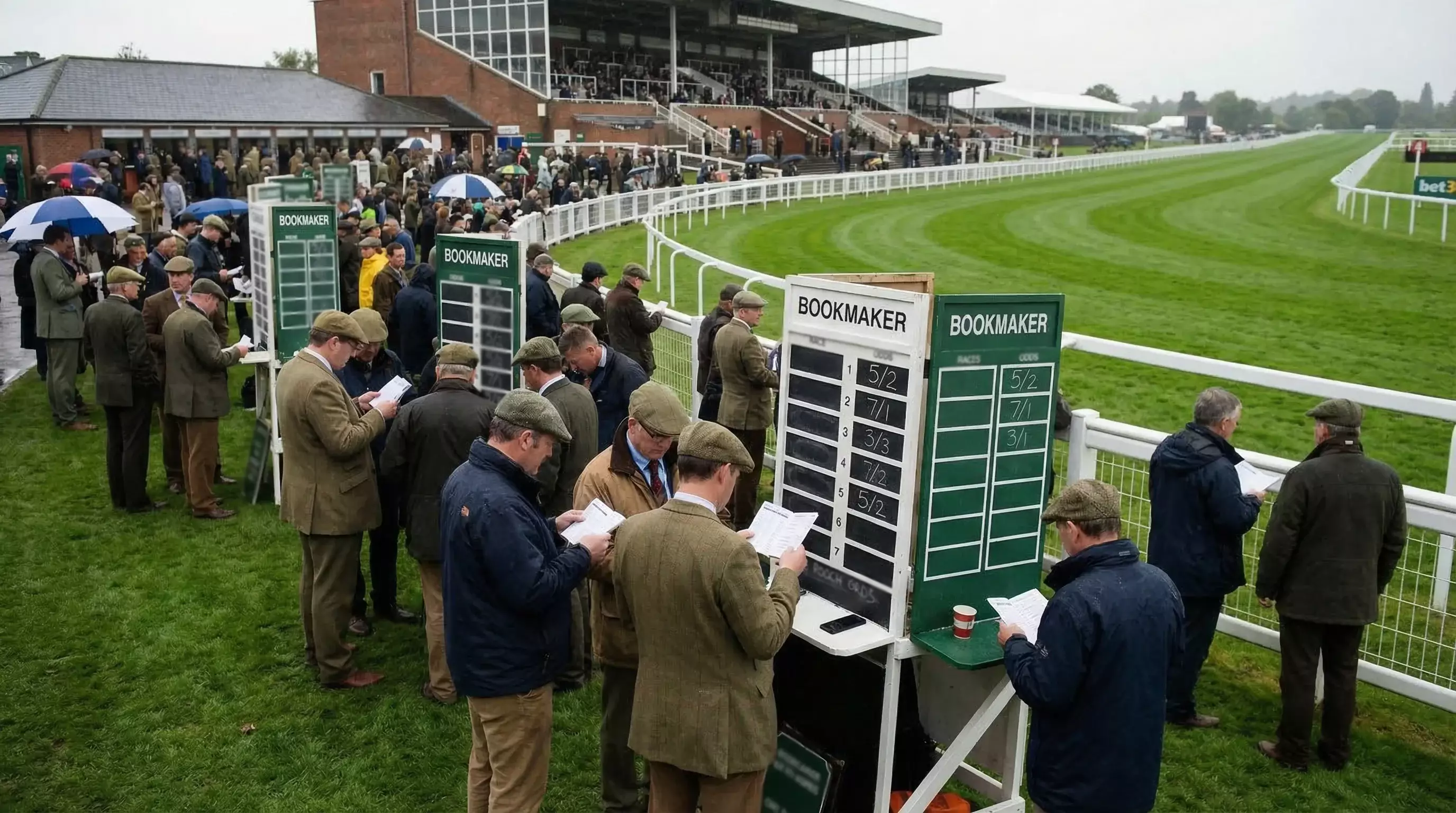
Understanding SP is not optional for serious punters. It is the reference rate against which every other pricing mechanism — fixed odds, Best Odds Guaranteed, Betfair Starting Price — is measured.
From Victorian Betting Rings to Industry SP: A Brief History
The On-Course Era
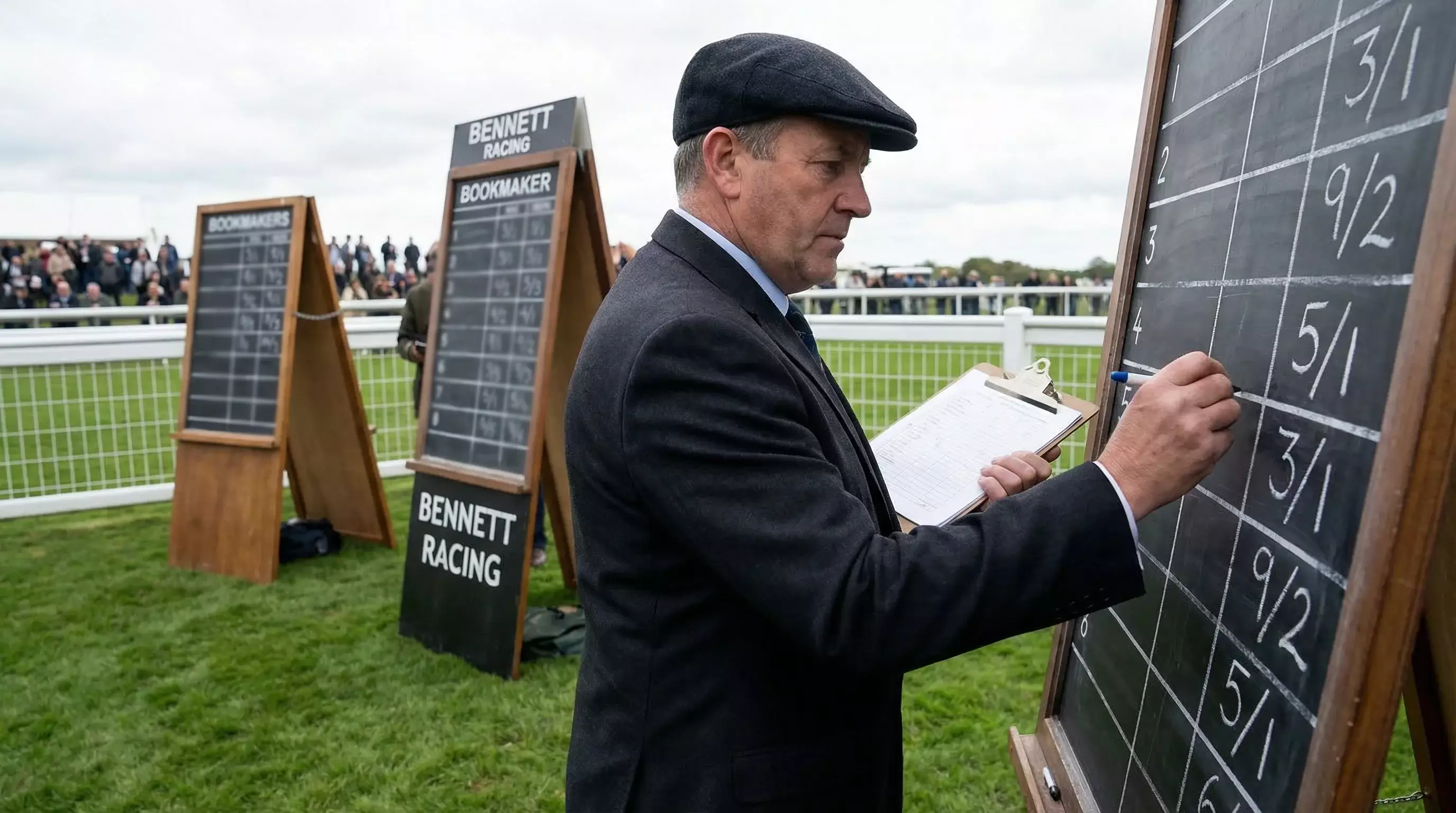
The starting price has roots in the Victorian era, when on-course bookmakers were the only legal channel for horse racing wagers. In the betting rings at Newmarket, Epsom and Ascot, bookmakers chalked prices on their boards, adjusting in real time as money arrived. The "starting price" was simply the consensus of those board prices at the moment the race began — read by an independent observer, recorded, and published.
For more than a century, this system worked because the on-course market was the market. Off-course cash betting was illegal until the Betting and Gaming Act of 1960 opened the door to licensed betting shops. Even after legalisation, the on-course ring remained the price-setting engine. But by the late 20th century, telephone and internet betting had shifted the weight of money away from the racecourse. The number of on-course bookmakers shrank, and the representativeness of ring prices came under question.
The 2015 Grand National produced an overround per horse of 1.67% — a figure the Starting Price Regulatory Commission noted was actually marginally below the three-year average of 1.7%, despite public criticism of the perceived margin in a 39-runner field.
The ISP Transition
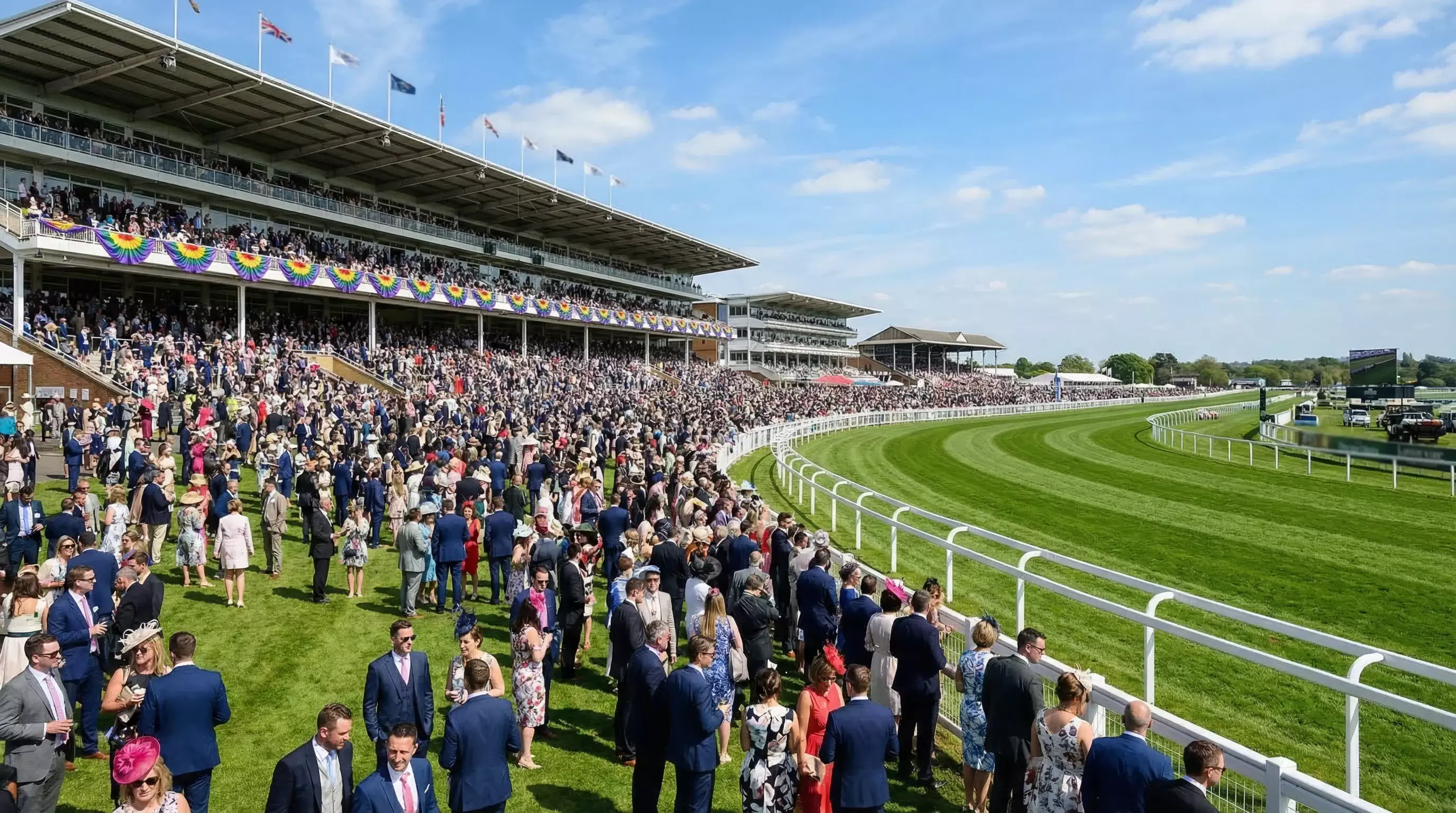
The real inflection point came with COVID-19. When racecourses closed in March 2020, on-course bookmakers vanished overnight. Racing resumed behind closed doors, and the industry was forced to calculate SP entirely from off-course prices — the so-called Industry Starting Price, or ISP. What was intended as a temporary measure quickly became permanent. Racecourse attendance has since recovered — the BHA's 2025 Racing Report recorded 5.031 million attendees, the first time the figure has exceeded five million since 2019, with a 4.8% increase on the previous year — but the ISP model has stayed. On-course bookmakers still operate, but their boards are now just one input into a larger sampling pool that includes major off-course firms.
The transition from on-course SP to ISP was arguably the biggest structural change to British horse betting since the legalisation of off-course shops. It redefined who sets the price and what data counts. Whether that change has been good for punters is a question the data sections of this guide will address directly.
How the Starting Price Is Calculated Step by Step
The starting price is not plucked from thin air, nor is it an average of every bookmaker's odds. It is a median-based calculation, governed by the Starting Price Regulatory Commission (SPRC), and it follows a specific procedure that has evolved significantly over the past five years. Here is how it works in 2026.
The Sample Pool
The SPRC defines a panel of bookmakers whose prices contribute to the SP calculation. Historically, this panel was composed exclusively of on-course bookmakers — the firms physically present in the betting ring at the racecourse. Today, under the Industry Starting Price model, the panel includes both on-course and off-course operators. The maximum sample size is 24 bookmakers, the minimum is 6, and at smaller all-weather fixtures the threshold can drop to as few as 3, according to the SPRC's consultation document.
The shift to this blended model was driven by a simple reality: by the time of the SPRC's 2020/21 review, on-course betting accounted for just 1.4% of all wagers placed on British racing. Basing the official price on such a thin slice of the market was no longer defensible. The ISP model incorporated off-course prices to create a sample that better reflected where the money actually was.
Ranking and the Median
At the off — the exact moment the race starts — prices from each bookmaker in the sample are collected for every runner. These prices are then ranked from lowest to highest. The starting price is the median of that ranked list. If the sample contains an even number of bookmakers, the SP is calculated as the midpoint between the two central values, rounded to the nearest standard betting increment.
Why the median rather than the mean? Because the median is resistant to outliers. If one bookmaker is offering 20/1 while fourteen others are at 10/1, the median ignores that extreme price. An arithmetic mean would be pulled towards it. For a market where individual bookmakers sometimes hold rogue positions — whether through error, thin volume, or deliberate strategy — the median produces a more stable and representative price.
Overround and What the SPRC Does Not Control
A critical point often missed in guides to SP: the SPRC does not set individual prices, margins, or overround targets. Its role is to define the methodology — the rules of the calculation — not to influence the numbers that go into it. As the SPRC itself states: "The SPRC does not set individual prices, overrounds or margins, nor does it set targets for what they should meet. Its responsibility is simply and straightforwardly to set the parameters by which the SP is calculated."
This distinction matters because overround per horse (OPH) — the built-in margin on each runner in the SP — is a product of bookmaker pricing behaviour, not regulatory design. When OPH rises, as it did in 2023 according to analysis by the Horseracing Bettors Forum, that is a market outcome, not a policy decision. The SPRC can adjust the methodology, but it cannot compel bookmakers to offer narrower margins.
Verification and Publication
Once calculated, the SP is verified by independent officials and published immediately as the settlement price for all SP bets placed with licensed bookmakers.
The modern SP is a median of up to 24 bookmaker prices sampled at the off, calculated under rules set by the SPRC. The switch from a purely on-course sample to the ISP model was the most significant structural reform in SP history, driven by the collapse of on-course betting to just 1.4% of the total market.
SP vs Fixed Odds: Making the Right Call
Every horse racing bet presents the same fork in the road: take a fixed price now, or leave it to SP. The decision sounds simple — and sometimes it is — but the consequences compound over hundreds of bets, and the right answer depends on what you know, when you know it, and what type of horse you are backing.
Fixed odds lock in a price the moment you place your bet. If you back a horse at 6/1 in the morning and it drifts to 10/1 by the off, you still get 6/1. Conversely, if it shortens to 3/1, you have protected yourself. The advantage of fixed odds is certainty: you know your potential return before the race starts. The disadvantage is that you are betting into an immature market. Morning prices are tissue prices — bookmaker estimates set before real money has tested them. They can be significantly different from the final SP.
SP, by contrast, reflects the full weight of the market at the moment of truth. It captures late money, insider support, stable confidence and the panic selling that happens when a horse looks wrong in the paddock. The trade-off is uncertainty: you accept whatever the market delivers.
Data from FlatStats, covering hundreds of thousands of runners on the British Flat, sheds light on the asymmetry. At SP odds of Evens, the actual strike rate was 48% against an implied probability of 50%, producing a return on investment of approximately −3.87%. At SP 4/1, the strike rate dropped to 17.15% against an expected 20%, with ROI falling to −14.23%. At SP 33/1, the strike rate collapsed to 1.24% against an implied 2.94%, with ROI plummeting to −57.67%. The pattern is clear: the wider the SP, the greater the bookmaker's embedded advantage.
This is where the decision framework lives. If you are backing short-priced horses — say, odds-on to 3/1 — the SP margin is relatively tight, and the convenience of accepting SP is low-cost. The difference between the fixed price and the SP is unlikely to be dramatic, and Best Odds Guaranteed (covered in the next section) can eliminate any downside. For these runners, SP is often the pragmatic choice.
However, if you are targeting horses at bigger prices — 10/1 and upwards — the SP margin widens substantially, and locking in a fixed price can protect you from that embedded disadvantage. A horse that opens at 14/1 in the morning and drifts to 20/1 by the off will pay you 14/1 at fixed odds, which may represent better value-per-unit of probability than the wider SP. On the other hand, if that horse shortens from 14/1 to 8/1, the SP bettor gets worse value, but the fixed-odds bettor secured the bigger price.
The practical rule: the shorter the price, the smaller the cost of accepting SP; the bigger the price, the more it pays to shop early and lock in. Market conditions, race type, and your assessment of likely price movement all matter, but this gradient is a sound default framework.
SP vs BSP: Traditional Price Meets the Exchange
Betfair's exchange introduced a fundamentally different pricing model to horse racing, and with it came the Betfair Starting Price — BSP. While the traditional SP is derived from bookmaker odds with their built-in margin, BSP is formed from matched and unmatched orders on the exchange at the point the race starts. The two prices often diverge, and understanding why is essential for any punter comparing options.
The structural difference is overround. Traditional SP carries a bookmaker margin — the overround — which, according to modelling by On Course Profits, averages approximately 130% across a typical field. That means if you converted every SP in a race to implied probabilities and summed them, the total would be around 130% rather than 100%. The extra 30 percentage points represent the collective bookmaker margin. BSP, by contrast, operates on an exchange where backers and layers set prices directly. The aggregate overround of BSP prices across a field tends to hover near 100% — approaching a theoretically fair market.
On paper, that makes BSP look like an obvious winner. And at a portfolio level, BSP does tend to offer better prices than SP, particularly on outsiders where bookmaker overround is most aggressively applied. The Betfair Hub reports that BSP data covers over 381,000 races and more than 3.2 million individual runners, with implied probabilities closely matching actual outcomes — a hallmark of market efficiency.
But there are caveats. BSP is formed from the exchange market, and exchange liquidity varies enormously by race. A Group 1 at Ascot will have deep liquidity, tight spreads, and a BSP that is genuinely representative. A Class 6 handicap at Catterick on a Tuesday afternoon may have thin order books, and the BSP can be skewed by a relatively small amount of money. In low-liquidity races, the BSP may not represent a price you could realistically have obtained had you been trading on the exchange.
There is also the commission factor. Betfair charges a percentage on net winnings (typically 2–6%, depending on the rewards package selected). A BSP of 12.0 (11/1) with 5% commission yields a net return of 11.45 — still better than an SP of 10/1, but the gap narrows once commission is factored in.
| Factor | Traditional SP | Betfair BSP |
|---|---|---|
| Overround | Approximately 130% | Approximately 100% |
| Commission | None (built into price) | 2–6% on net winnings |
| Liquidity | Consistent across all races | Varies widely by race quality |
| BOG eligible | Yes (with most bookmakers) | No |
| Exotic bets | Yes (Forecast, Tricast, etc.) | Limited |
| Best for | Short-priced horses, exotic bets, casual punters | Outsiders, high-volume bettors, value seekers |
The practical takeaway: BSP generally offers superior raw value, especially on horses at longer odds where bookmaker margin bites hardest. But SP, combined with Best Odds Guaranteed, can close the gap for shorter-priced selections — and it remains the only option for most exotic bet types. The choice is not binary; serious punters use both, deploying each where it offers the best return for the specific race and selection.

Best Odds Guaranteed: SP's Insurance Policy
Best Odds Guaranteed — BOG — is arguably the most punter-friendly promotion in horse racing, and it sits directly at the intersection of fixed odds and SP. The concept is simple: you take a fixed price on a horse, and if the SP turns out to be higher than your price, the bookmaker pays you at the better SP instead. You get the best of both worlds — the floor of a fixed price with the upside of any SP drift.
BOG matters because it neutralises one of the core anxieties of early betting. Without it, taking 5/1 in the morning means accepting that if the horse drifts to 8/1 by the off, you have left money on the table. With BOG, that drift becomes a bonus rather than a regret. Equally, if the horse shortens to 3/1, you still receive your 5/1 fixed price. The promotion effectively gives you free optionality on any positive price movement.
Most major licensed bookmakers in the UK offer BOG on horse racing, typically on UK and Irish fixtures. However, the fine print matters: common restrictions include maximum payout caps, exclusions for ante-post bets, restrictions on all-weather or lower-grade fixtures, and time-of-day cutoffs. Account-level restrictions have also become more prevalent since the tightening of affordability checks — punters deemed consistently profitable may find BOG privileges withdrawn, reflecting the economic reality that BOG is a promotional cost bookmakers manage carefully.
From a strategic perspective, BOG is most valuable when you expect a horse to drift — that is, when you believe the market will move the price outward between the time you bet and the off. In those cases, taking the early price with BOG gives you the current price as a guaranteed minimum with a free ride on any further weakening. For horses you expect to shorten (steamers), BOG has less impact — you were already getting the better price by taking fixed odds early.
The interaction between BOG and SP creates a practical decision hierarchy. If a bookmaker offers BOG and you want to back a horse at a price you consider fair, take the fixed price and let BOG handle the upside. If no BOG is available, you are back to the pure SP-versus-fixed-odds calculus. BOG does not change the underlying maths of SP overround; it simply captures favourable price movements without the downside of adverse ones.
SP and Exotic Bets: Forecast, Tricast and Beyond
SP's influence extends well beyond simple win and each-way bets. In exotic wager types — Forecast, Tricast, Placepot, and multi-leg pools like the Scoop6 — starting price is either the direct settlement mechanism or a critical input into the calculation. Understanding how SP feeds these bets is essential for anyone venturing beyond straightforward singles.
The Computer Straight Forecast
A Forecast bet requires you to predict the first two finishers in a race in the correct order. If you place your Forecast at SP, the payout is determined by the Computer Straight Forecast (CSF) — a formula that uses the SPs of the first and second-placed horses to generate a dividend. The CSF is not simply a multiplication of the two SPs; it uses a more complex algorithm accounting for the probability of each horse finishing in the specified positions, weighted by the overall market.
What matters for punters is this: because the CSF is derived from SP, the overround embedded in starting prices flows through into the Forecast dividend. If SPs carry heavy margins, the Forecast dividend is compressed. The favourite-longshot bias that erodes returns on straight win bets at longer prices also compounds in Forecasts, particularly when predicting an outsider to finish second.
Tricast Calculations
The Tricast extends the same logic to three horses in exact finishing order. The Computer Tricast formula takes the SPs of the first, second and third-placed horses to generate a dividend. With three prices compounding, the overround effect is amplified — a Tricast with three short-priced runners may pay modestly, while one featuring a long-priced third can produce headline-grabbing returns attached to tiny probabilities.
Tote Placepot and Pool Betting
The Tote Placepot — picking a placed horse in each of the first six races on a card — operates on a pari-mutuel basis where SP does not directly determine the dividend but serves as the reference for assessing whether pool payouts represent value. Placepot betting peaks at festival meetings, and the BHA's data showing 5.031 million racecourse attendees in 2025 illustrates the scale of on-course pool activity at major fixtures like Cheltenham, Royal Ascot and the Grand National.
Edge Cases: Dead Heats and Non-Runners
Exotic bets at SP come with additional complications. If a non-runner is declared after you have placed a Forecast or Tricast, Tattersalls Rule 4 deductions apply to the remaining runners' SPs. Rule 4 — in operation since 1886 — allows a maximum deduction of 90 pence in every pound, though such extreme deductions are rare and occur only when a very short-priced favourite is withdrawn. In Forecasts and Tricasts, non-runners can void the bet entirely if the field is reduced below the minimum number of runners.
Dead heats in exotic bets trigger proportional reductions: the dividend is divided according to standard dead-heat rules, and the SP-derived formula is adjusted accordingly. These situations are infrequent but can produce confusing settlement calculations.
Building an SP Betting Strategy That Holds Up
Most SP strategies fail because they treat starting price as a single, uniform product. SP at Evens behaves very differently from SP at 20/1, and a strategy that ignores that distinction is working with a blunt instrument. The bookmaker's edge widens dramatically as the price increases, so a viable SP strategy must account for this gradient.
The first principle is price-range selection. The favourite-longshot bias is not a theory — it is a well-documented empirical pattern confirmed across hundreds of thousands of British races. Horses at shorter SPs deliver returns much closer to the implied probability than horses at longer SPs. This does not mean you should only back favourites; it means that if you are betting at SP, your expected cost of doing so is lower on shorter-priced runners. At bigger prices, you are paying a heavier implicit tax, and you need a correspondingly larger edge to overcome it.
The second principle is market awareness. According to the SPRC, approximately 90% of all money wagered on horse racing in the UK is concentrated on the first three horses in the betting. The remaining 10% is spread across every other runner. This extreme concentration means that the market on favourites is deep, liquid and hard to beat — prices are efficient because they are formed by a huge volume of money and scrutiny. The market on outsiders, by contrast, is thin. Prices at 20/1 and above are set with far less input from informed money, which is partly why the favourite-longshot bias exists: outsiders are systematically overpriced, but not because they represent value — because the bookmaker's margin on thin markets is higher.
This leads to the third principle: use SP selectively, not as a default. SP is not a strategy in itself — it is a settlement mechanism. A strategy is a set of rules for identifying when SP is likely to offer better value than the available alternatives (fixed odds, BSP, BOG-enhanced prices) and acting accordingly. In practical terms, this often means taking SP on horses you believe will shorten (where SP will be lower than the current price, but BOG protects you if you took the fixed price), and taking a fixed price on horses you believe will drift.
Before accepting SP: five questions to ask
- Is the horse likely to shorten or drift before the off?
- Does my bookmaker offer Best Odds Guaranteed on this race?
- What price range am I operating in — and what does the data say about SP value at this level?
- Is exchange liquidity sufficient for BSP to be a realistic alternative?
- Am I placing an exotic bet where SP is the only settlement option?
The fourth principle is record-keeping. No SP strategy is worth anything without data. Track your bets at SP against what you would have received at fixed odds and BSP. Over a sample of 200+ bets, the patterns will be clear: which price ranges cost you money at SP, where BOG saved you, and whether your selection skill is sufficient to overcome the embedded margin. Without that feedback loop, you are guessing — and the bookmaker's margin ensures that guessing loses over time.

SP by the Numbers: Data That Challenges Assumptions
The horse racing betting market in Britain is enormous. The Gambling Commission's annual industry statistics report a gross gambling yield (GGY) of £766.7 million for remote horse racing betting in the financial year April 2024 to March 2025, out of a total remote GGY of £2.6 billion. Horse racing is not the largest online gambling product, but it remains one of the most important because it generates the Levy income that funds the sport.
Yet the topline GGY figure masks a more complicated story underneath. While yields have remained broadly stable year-on-year — the previous period produced £771.1 million — this stability has come alongside falling turnover. The BHA's 2025 Racing Report shows that the average betting turnover per race fell by 5.6% compared to 2024 and by 11.6% compared to 2023. The market is generating similar yields from fewer bets, which implies that the margin being extracted per bet — including through SP — has increased. For punters, this is the critical number: not how much money flows through the market, but how much of it the market keeps.
Interactive Tool
GGY Year-on-Year Change, and Premier vs Core Gap
Calculate the exact change in remote GGY between financial years, and the percentage-point gap between Premier and Core raceday turnover trends.
Percentage Change
-
-
Previous Period
-
Current Period
-
Absolute Change
-
What this guide gives as two figures without the change rate: "a gross gambling yield (GGY) of £766.7 million for remote horse racing betting in the financial year April 2024 to March 2025... the previous period produced £771.1 million." The percentage change is never calculated — it's -0.57%, a fall of £4.4 million, despite the guide describing yields as "broadly stable."
Percentage-Point Gap
-
-
Premier
-
Core
-
Divergence
-
What this guide gives as two directions without the gap: "Premier racedays saw average turnover per race rise by 1.1% in the 2025 data, while Core fixtures fell 8.1%." The gap between them is never calculated — it's 9.2 percentage points, illustrating the two-speed nature of the market.
The Favourite-Longshot Bias in the SP Data
Academic research has quantified what experienced punters have long suspected: the SP market is not equally expensive at every price point. A National Bureau of Economic Research working paper by Snowberg and Wolfers confirmed a pronounced favourite-longshot bias across millions of horse race starts, with longshots systematically overbet and favourites underbet. British-specific data from FlatStats, covering hundreds of thousands of runners on the UK Flat, demonstrates the same pattern in the domestic SP market.
The granular data from FlatStats, introduced earlier in the context of the SP-versus-fixed-odds decision, deserves a closer look in tabular form. The gradient is not linear — it accelerates. Each step up in price carries a disproportionately larger embedded cost.
| SP Odds | Implied Probability | Actual Win Rate | ROI |
|---|---|---|---|
| Evens | 50.00% | 48.00% | −3.87% |
| 4/1 | 20.00% | 17.15% | −14.23% |
| 33/1 | 2.94% | 1.24% | −57.67% |
Research by Smith and Vaughan Williams, published in the International Journal of Forecasting, found that this bias has been diminishing — the gap was statistically smaller in post-2000 data compared to the 1996–2000 period, likely due to improved information availability and the disciplining effect of exchange betting. But at the long end of the market the bias remains substantial.
The Levy Paradox and Industry Health
One of the most striking features of the current market is the disconnect between betting turnover and Levy income. Turnover is falling — but the Levy yield for 2024/25 reached nearly £109 million, according to the HBLB Annual Report, a fourth consecutive year of growth and the highest figure since the 2017 reform. The Levy is calculated on GGY, not turnover — so if bookmakers extract higher margins from fewer bets, GGY can hold steady or rise even as volumes drop.
Grainne Hurst, CEO of the Betting and Gaming Council, captured this tension: "For the fourth year running, contributions have increased to record levels. This demonstrates the growing, long-term investment regulated betting provides British horse racing. But it is concerning to see once more despite record levy contributions, racing continues to struggle" — a comment reported by iGamingBusiness.
The two-speed nature of the market is visible in the Premier-versus-Core split. Premier racedays saw average turnover per race rise by 1.1% in the 2025 data, while Core fixtures fell 8.1%. SP on a Premier card is formed in a deep, liquid market. SP on a quiet Tuesday afternoon is formed in a thinner market where the value proposition may differ.
Insider Trading and Market Integrity
A doctoral thesis by Chi Zhang at the University of York, analysing data from Yorkshire racecourses over 2013–2014, investigated the level of insider trading in SP markets using the Shin measure — a statistical method for estimating the proportion of informed money in a betting market. The study found "slightly lower" levels of insider trading than some earlier estimates had suggested, and did not confirm strong-form market efficiency in the SP. In plain terms: the SP market is reasonably clean, but it is not perfectly efficient, and there is scope for informed bettors to find edges — particularly in segments of the market where information flows less freely.
The SP Market After COVID: A Reshaped Landscape
COVID-19 did not just interrupt horse racing — it restructured the economics of SP in ways that are still playing out in 2026. When British racecourses closed in March 2020, the on-course betting market vanished. No punters in the ring meant no on-course bookmakers, no board prices, and no traditional SP. Racing resumed behind closed doors within weeks, but the pricing infrastructure had to be rebuilt from scratch, and the model that emerged — the Industry Starting Price — was fundamentally different from what came before.
The pandemic accelerated a transition that was probably inevitable but would have taken years normally. On-course betting was already marginal; COVID forced the industry to build a pricing mechanism reflecting the digital reality. The ISP, incorporating off-course bookmaker prices, became the standard and has not been rolled back.
Falling Turnover, Stable Yields
The post-COVID betting market tells a story of paradoxes. According to the BHA's Racing Report for 2024, total betting turnover on British horse racing fell by 6.8% year-on-year compared to 2023, and by 16.5% compared to 2022. The decline has been persistent and broad-based. Yet as noted in the data section, GGY has held remarkably steady, and the Horserace Betting Levy Board reported a Levy yield of nearly £109 million for 2024/25 — the highest since the 2017 reform.
The explanation is structural. Fewer bets are being placed, but the margin on those bets appears to be higher — a market where casual punters have been squeezed by affordability checks, leaving a higher proportion of recreational bettors who are less price-sensitive, and where bookmakers have widened margins in response to falling volumes.
Affordability Checks and the Black Market
The single most cited cause of turnover decline is the Gambling Commission's enhanced affordability check regime. Richard Wayman, Director of Racing at the BHA, stated bluntly: "I've no doubt that these [the decline] are headed by the impact of affordability checks and the extent to which they have resulted in people either stopping betting or placing their bets with unlicensed operators, where such checks don't take place" — as reported by iGamingBusiness.
The relevance to SP is direct: if high-volume punters are restricted by licensed bookmakers, the money they would have contributed to SP-forming markets is withdrawn. A thinner market may produce a less representative starting price and reduces the competitive pressure that keeps margins in check. Meanwhile, a study by the International Federation of Horseracing Authorities, highlighted by the BHA, found that unique visitors to 22 unlicensed betting sites covering British racing grew by 522% between August 2021 and September 2024 — more than 600,000 unique monthly visitors between January and September 2024. Every pound wagered on an unlicensed platform bypasses both the SP sample and the Levy.
The Horse Population and the Road Ahead
The post-COVID landscape extends to the supply side. The BHA reported that the number of horses in training fell by 1.0% in 2024 — from 18,630 to 18,452 — with Jumps racing down 3.0% while Flat grew by 0.5%. Fewer horses can mean smaller fields, which directly affects SP formation: a 6-runner race produces a very different market dynamic and overround structure than a 20-runner handicap. The spring 2026 National Hunt season, with the Cheltenham Festival as its centrepiece, will test whether these structural shifts have stabilised.
Frequently Asked Questions
How is the starting price calculated in the UK?
The starting price is calculated by the Starting Price Regulatory Commission (SPRC) using a median-based method. A panel of up to 24 bookmakers — both on-course and off-course under the current Industry Starting Price model — provides prices for every runner at the exact moment the race starts. These prices are ranked from lowest to highest and the SP is the median value. At smaller all-weather meetings, the panel can drop to as few as 3. The shift to the ISP model was driven by the fact that on-course betting had shrunk to just 1.4% of all wagers on British racing, making a purely on-course sample indefensible.
Should I take the SP or fixed odds?
It depends on the price range and market conditions. At shorter prices (odds-on to around 3/1), the bookmaker's SP margin is narrow, so accepting SP costs little. If Best Odds Guaranteed is available, taking a fixed price is almost always optimal — you get a guaranteed floor with free upside if the SP drifts higher. At longer prices (10/1 and above), the SP margin widens substantially, and locking in an early fixed price protects you from the steeper embedded cost. If you expect a horse to drift, SP or BOG-backed fixed odds work well. If you expect it to shorten, secure the current fixed price before the market moves.
What is the difference between SP and BSP?
SP is the official bookmaker-derived price, calculated as a median of prices from a licensed panel. BSP is the Betfair Exchange starting price, formed from matched and unmatched orders at the off. The key structural difference is overround: SP carries a bookmaker margin averaging approximately 130% across a race, while BSP operates closer to a 100% book — a near-fair market. BSP tends to offer better raw prices, especially on outsiders, but Betfair charges commission on net winnings (typically 2–6%), liquidity varies by race, and BSP is not eligible for Best Odds Guaranteed. SP remains necessary for exotic bets like Forecast and Tricast.
Glossary of SP and Betting Terms
Starting Price (SP) — the official odds assigned to each runner at the moment a race begins, used to settle all bets where no fixed price was taken.
Industry Starting Price (ISP) — the current SP model introduced during the COVID-19 pandemic, which uses prices from both on-course and off-course bookmakers to calculate the median.
Betfair Starting Price (BSP) — the starting price generated by the Betfair Exchange based on matched and unmatched orders at the off, typically operating near a 100% market.
Overround — the bookmaker's built-in margin, expressed as the sum of implied probabilities for all runners in a race. A 130% book means 30 percentage points of overround.
Best Odds Guaranteed (BOG) — a promotion offered by most UK bookmakers where you receive the higher of your fixed price or the SP, whichever is greater.
SPRC — the Starting Price Regulatory Commission, the body responsible for setting the methodology and parameters by which the SP is calculated.
Favourite-Longshot Bias — the empirical pattern in which favourites deliver returns closer to implied probability than outsiders, meaning long-priced horses carry a proportionally larger bookmaker margin.
Computer Straight Forecast (CSF) — a formula that uses SPs of the first two finishers to calculate the Forecast bet dividend.
Rule 4 (Tattersalls Rule 4) — a deduction applied to winnings when a runner is withdrawn after the final declaration stage. Maximum deduction is 90p per £1.
Drifter / Steamer — a drifter is a horse whose price lengthens before the off (weakening support); a steamer is one whose price shortens (strengthening support).
GGY (Gross Gambling Yield) — the amount retained by bookmakers after paying out winnings, representing total stakes minus total payouts.
Horserace Betting Levy — a statutory charge on bookmakers' gross profits from British horse racing, used to fund prize money, integrity and equine welfare.
Putting SP Knowledge to Work
The starting price is not a mysterious black box — it is a calculable, measurable, and strategically navigable feature of the British horse racing market. The price that settles every bet is formed through a specific process (median of a bookmaker panel), carries a specific cost (overround that scales with price), and sits within a specific economic context (falling turnover, stable yields, a growing unlicensed market eating at the edges).
Knowing all of this changes how you bet. It means you stop treating SP as a passive default and start treating it as one option among several — cheap at short prices, expensive at long ones, and always worth benchmarking against fixed odds and exchange alternatives. Use BOG when available, track results across price ranges, and pay attention to whether a race is a deep Premier fixture or a thin Core card.
The 2026 racing season offers the same fundamental challenge it always has: beating a market that is structurally designed to favour the bookmaker. But structure is not destiny. The favourite-longshot bias tells you where the margin is heaviest. The SP-versus-BSP comparison tells you when the exchange offers genuine value. The turnover data tells you which markets are liquid and which are thin. Armed with that information, you are no longer betting blind. You are betting with the same data the industry uses — and that is the closest thing to a genuine edge.
