
 Available in US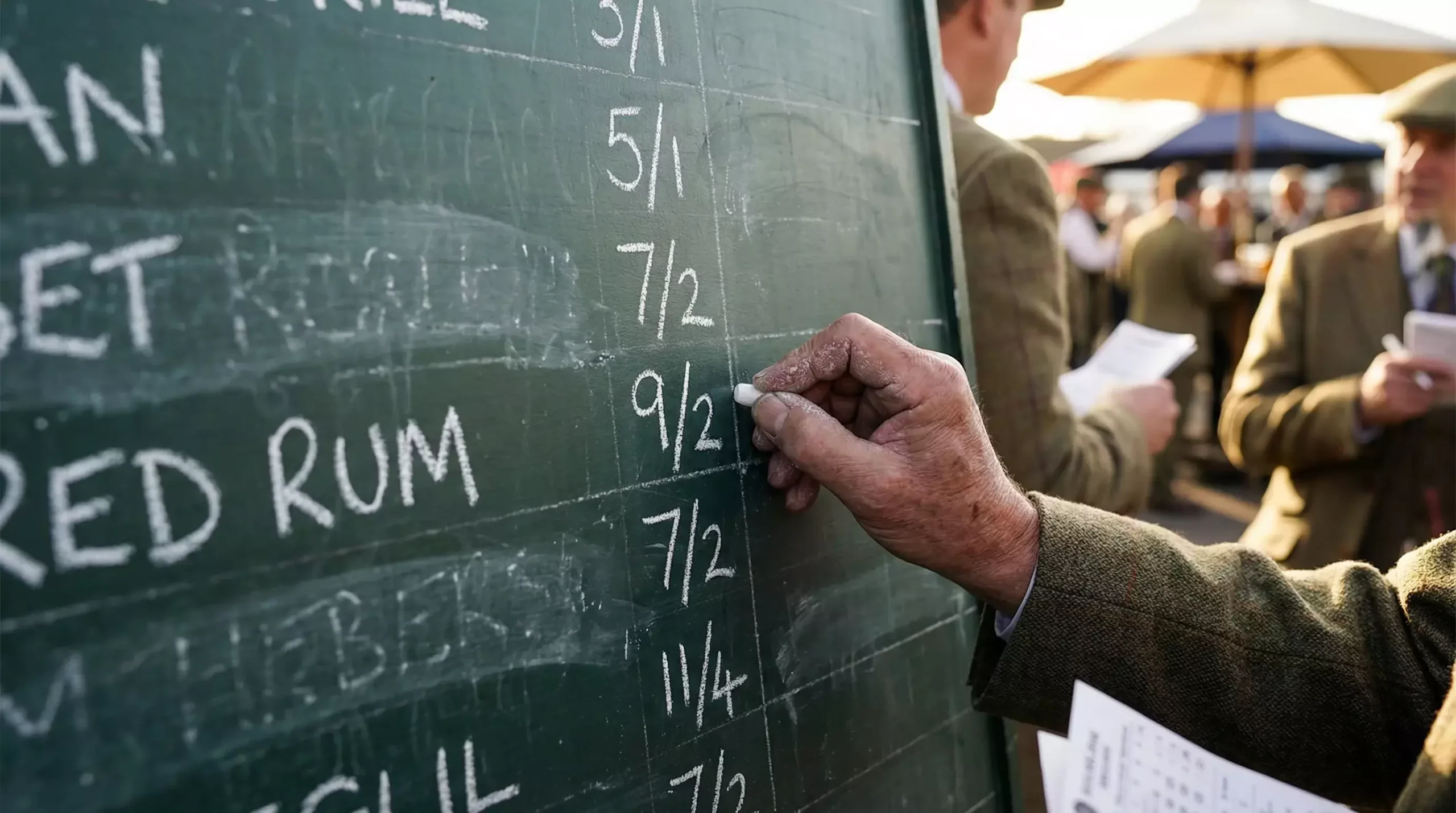
Why Odds Format Matters When You Bet at SP
The starting price of a horse can be expressed in at least two ways — fractional and decimal — and the format you see depends on your bookmaker’s settings, the platform you are using, and in some cases which country you are in. The horse’s chance does not change. The payout does not change. But the way the number is presented can confuse new punters and even trip up experienced ones who switch between platforms. Understanding Decimal and Fractional Odds in SP Betting — More on this topic at horse betting sp.
With around 7% of UK adults betting on horse racing in any given four-week window, according to the Gambling Commission’s survey, a significant number of people encounter SP odds regularly without fully understanding the notation. Fractional odds remain the default in British racing culture — at the course, on television, and in most racing media. Decimal odds dominate online betting platforms and are the standard across continental Europe. Same price, different language — and both are worth understanding.
Fractional Odds: The Traditional UK Format
Fractional odds are expressed as one number divided by another: 5/1, 3/1, 7/2, 11/4. The first number represents the profit, the second represents the stake. At 5/1, for every £1 you stake, you receive £5 in profit plus your £1 stake back — a total return of £6. At 7/2, a £2 stake returns £7 profit plus the £2 stake — a total of £9.
The notation dates back centuries and is deeply embedded in British racing. On-course bookmakers chalk fractional prices on their boards. Racing commentators call them in fractional form. Form guides and the Racing Post display them as fractions. If you attend a British racecourse, fractional odds are the language of the ring.
Some fractional prices trip people up. Odds-on prices — where the horse is more likely to win than lose, in the market’s estimation — are expressed with the larger number second: 1/2 (bet £2 to win £1), 4/9 (bet £9 to win £4), 1/5 (bet £5 to win £1). The key difference is that at odds-on, your profit is less than your stake. These are the prices you see on dominant favourites, and they can feel unintuitive to new bettors accustomed to the idea that a bet should pay more than you put in.
Evens (1/1) is the midpoint: you stake £1, you win £1 — a total return of £2, or double your money. Anything shorter than Evens is odds-on; anything longer is odds-against. This simple framework organises the entire fractional price spectrum.
Fractional odds also have a cultural vocabulary. A horse at 100/30 is often spoken as “one hundred to thirty” or simplified to “10/3.” A horse at 11/8 is “eleven to eight.” Recognising these spoken forms, particularly if you are listening to racing broadcasts or standing in a betting ring, is part of the literacy of UK racing.
Decimal Odds: The European Standard
Decimal odds express the total return per unit staked, including the stake itself. A horse at 6.0 in decimal pays £6 for every £1 staked — £5 profit plus your £1 back. This is identical to 5/1 in fractional. The conversion is straightforward: Decimal = (Fractional Numerator / Fractional Denominator) + 1.
The advantage of decimal odds is simplicity. There is no need to separate profit from return in your head. The number you see is the multiplier: stake times decimal equals total return. A £10 bet at 4.5 returns £45. A £10 bet at 1.5 returns £15. No fractions, no mental arithmetic with numerators and denominators.
Decimal odds are the default on Betfair and most online betting exchanges, on European betting platforms, and increasingly as an option on UK bookmaker apps. Many punters set their accounts to decimal as a personal preference, even when betting on British racing. The format is especially useful when comparing prices across multiple bookmakers or exchanges, because the single-number format makes relative value immediately visible.
Odds-on prices in decimal are simply numbers between 1.01 and 1.99. A horse at 1/2 fractional is 1.5 decimal. A horse at 4/9 is approximately 1.44. The decimal figure makes the return structure instantly clear in a way that fractional odds-on prices sometimes obscure.
Converting Between Formats: Quick Reference Table
The conversion formula is simple in both directions. From fractional to decimal: divide the numerator by the denominator and add 1. From decimal to fractional: subtract 1, then express the result as a fraction in its simplest form.
| Fractional | Decimal | Implied Probability |
|---|---|---|
| 1/5 | 1.20 | 83.3% |
| 1/2 | 1.50 | 66.7% |
| Evens (1/1) | 2.00 | 50.0% |
| 2/1 | 3.00 | 33.3% |
| 4/1 | 5.00 | 20.0% |
| 10/1 | 11.00 | 9.1% |
| 20/1 | 21.00 | 4.8% |
| 33/1 | 34.00 | 2.9% |
The third column — implied probability — is what the price “thinks” the horse’s chance of winning is, before accounting for the overround. At Evens (2.0 decimal), the market implies a 50% chance. According to FlatStats data, horses at SP Evens actually win around 48% of the time — close to the implied figure, reflecting the relatively modest overround at the shortest prices. The gap between implied and actual probability widens as you move down the table, which is the favourite-longshot bias expressed in numbers.
For practical purposes, most punters do not need to convert in their heads. Every betting app allows you to toggle between fractional and decimal display in the settings. The value of knowing the conversion is not arithmetic speed — it is understanding. When you see 5.0 on an exchange and 4/1 on a bookmaker board and recognise them as the same price, you can compare value across platforms without hesitation.
Implied Probability: The Number Behind the Number
The most useful thing you can extract from any odds format is the implied probability. It is the market’s estimate of how likely a given outcome is, expressed as a percentage. The formula is: Implied Probability = 1 / Decimal Odds. So a horse at 4.0 decimal (3/1 fractional) has an implied probability of 25%.
Implied probability is the bridge between the odds on your screen and the real-world question of whether a bet offers value. If you believe a horse has a 30% chance of winning and the market prices it at 25% (4.0 decimal), the bet has positive expected value — in your estimation, the horse is more likely to win than the price suggests. If you believe it has a 20% chance and the price implies 25%, the bet has negative expected value and you should look elsewhere.
One important caveat: the implied probabilities of all runners in a race, when summed, will exceed 100%. The excess is the overround — the bookmaker’s margin. At SP, the total might be 130% rather than 100%, which means the implied probabilities are inflated. To estimate the “true” probability, you need to strip out the overround, typically by dividing each horse’s implied probability by the total book percentage. This adjusted figure is a closer approximation of the market’s genuine belief in each horse’s chance. See also SP Betting on All-Weather Racing.
When you convert SP odds to implied probability and compare them to your own assessment, you are doing the core work of value betting. The odds format — fractional, decimal, or anything else — is just the container. The probability inside it is what matters. Whether the SP on your slip reads 3/1 or 4.0, the question is the same: does this horse have a better chance than this price implies? Answer that consistently and accurately, and the format of the numbers is just a detail.
