
 Available in US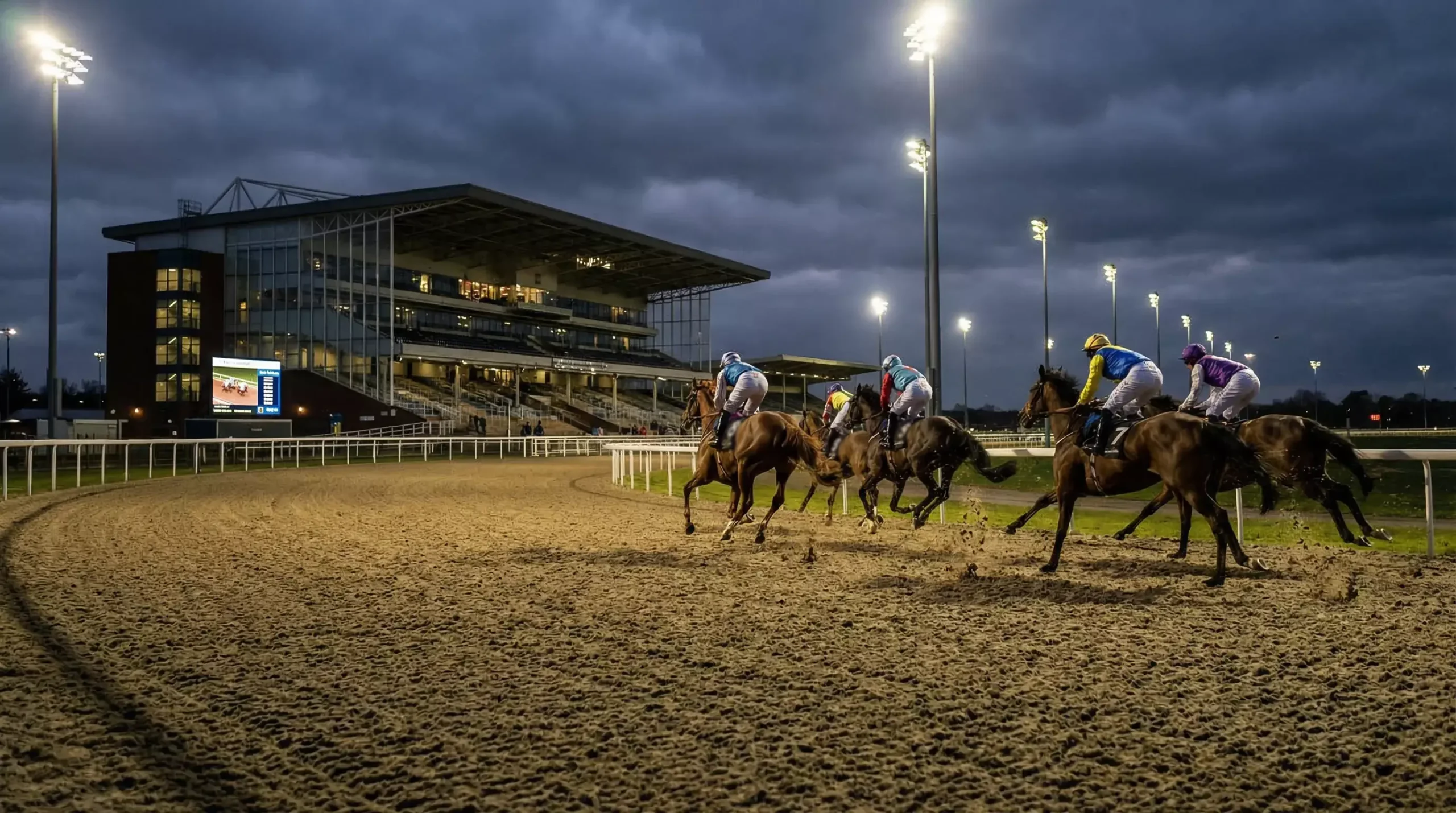
All-Weather SP — A Different Beast
All-weather racing runs year-round on synthetic surfaces at a handful of British tracks — Kempton, Lingfield, Wolverhampton, Southwell, Newcastle, and Chelmsford. It fills the calendar when turf racing hibernates, provides a testing ground for horses between Flat campaigns, and keeps the betting market ticking over through the winter months. But the SP you receive on an all-weather card is not the same product as the SP at Ascot on a Saturday afternoon — and the differences are structural, not cosmetic. SP Betting on All-Weather Racing — More on this topic at horse betting sp.
The starting point is the sample. According to the SPRC’s consultation document, the standard minimum sample for SP calculation is six bookmaker prices, but on all-weather meetings the threshold drops to as few as three. That is half the normal floor. A starting price derived from three data points is inherently less robust than one derived from six, twelve, or twenty-four. Smaller ring, different maths — and the implications ripple through every bet you place on these cards.
Smaller Samples, Wider Margins
The reduced sample size on all-weather cards is not an arbitrary concession. It reflects the reality that fewer on-course bookmakers attend these fixtures, and online betting volumes are lower than on equivalent turf meetings. The SPRC’s parameters acknowledge that demanding a full sample at a Monday evening card in Wolverhampton is impractical — there simply is not enough market activity to generate one.
The consequence is predictable. With fewer prices in the sample, the SP is more sensitive to individual bookmaker positions. If one firm in a three-price sample offers a significantly different price from the other two, the median shifts more than it would in a twenty-four-price sample where the outlier would be absorbed. This sensitivity increases the risk of the SP being unrepresentative of the broader market, particularly for runners at the extremes — short-priced favourites and long-priced outsiders, where a single tick of difference in one bookmaker’s price can move the median meaningfully.
Overround per horse also tends to be higher on all-weather cards. The Horseracing Bettors Forum’s analysis of OPH data has noted anomalous fluctuations that do not always correlate with obvious external factors, and all-weather racing is frequently cited as a category where overrounds run above average. The reasons are interlinked: lower turnover gives bookmakers less competitive pressure to tighten prices, thinner on-course representation reduces the number of independent price-setters, and the races themselves attract less media and public scrutiny than high-profile turf events.
None of this means all-weather SP is corrupt or unreliable. The ISP methodology is the same regardless of surface. But the raw material — the market from which the SP is drawn — is thinner, and a thinner market produces a less refined price. The punter who understands this is better positioned than the one who treats every SP as equivalent.
All-Weather Race Patterns and SP Behaviour
Beyond sample quality, all-weather racing has characteristics that affect how prices form and how the SP behaves.
Going conditions are more predictable. Synthetic surfaces — Polytrack at Lingfield, Kempton, and Chelmsford; Tapeta at Wolverhampton, Newcastle, and Southwell — are designed to maintain a consistent racing surface regardless of weather. There are no sudden ground changes from Good to Heavy after an afternoon downpour, and no late-morning watering that transforms the going from Firm to Good to Soft. This consistency removes one of the major sources of late-market volatility on turf, which means all-weather prices tend to be more stable in the final hour before the off. Steamers and drifters still occur, but the triggers are more likely to be form-related (a change in market opinion about the horse) than condition-related (a change in the track that reshapes the race).
Field sizes are often smaller. All-weather cards frequently feature races with eight to twelve runners, compared with the sixteen-to-twenty-runner handicaps common on busy Saturday turf cards. Smaller fields concentrate betting volume on fewer runners, which might seem to improve market quality — but the overall volume on these cards is low enough that the concentration does not fully compensate for the reduced interest.
The form book on all-weather is also distinctive. Horses that run repeatedly on synthetic surfaces build up track-specific form that is not always portable to turf. This creates a niche knowledge base: punters who follow all-weather racing closely and understand the biases of specific tracks (Wolverhampton’s tight left-hand bends, Kempton’s speed-favouring straight, Lingfield’s stiff uphill finish) can develop an edge that the casual punter does not possess. The SP, shaped as it is by a thinner market, may be less efficient at pricing in this specialist knowledge, which creates opportunities for those with genuine all-weather expertise.
Data Snapshot: AW vs Turf SP Returns
Isolating all-weather SP returns from turf returns is not straightforward, because most publicly available datasets — including the widely cited FlatStats analysis — focus primarily on turf racing. However, the general patterns of SP returns by price range apply with additional caveats on all-weather.
The favourite-longshot bias — the systematic tendency for favourites to return more per pound staked than outsiders — operates on all-weather just as it does on turf. But the higher overround per horse on all-weather means the absolute returns are worse at every price point. If turf SP Evens produces a −3.87% ROI, all-weather SP Evens is likely to produce something worse, because the margin built into the price is larger.
At longer prices, the discrepancy widens further. All-weather outsiders — 20/1 and beyond — are priced in a thinner market with higher overround, and the returns are correspondingly worse than their turf equivalents. The bias at the long end is exacerbated, not reduced, by the all-weather market’s structural weaknesses.
The one area where all-weather SP can offer relative value is in niche situations where the SP lags behind specialist knowledge. A horse with a strong all-weather record returning from a break on a surface it has proven form on may not attract the volume of money its chance deserves, precisely because the market is thin and the casual bettors who dominate volume on big turf days are absent. In these spots, the SP can be generous — not because the system is generous, but because there are not enough participants to price the horse accurately.
Tips for Betting SP on All-Weather Cards
If you bet SP on all-weather racing, a few practical adjustments improve your position.
Be selective about which fixtures you bet on. Evening meetings at Wolverhampton and Chelmsford produce some of the thinnest markets in British racing. Afternoon meetings, and particularly Saturday all-weather cards when no competing turf racing is on, attract better volume and produce more reliable SPs.
Consider taking a fixed price rather than SP. The reduced market depth on all-weather means that the SP is more likely to be pushed around by late money. If you identify value in the morning or early afternoon, locking in a price — especially with Best Odds Guaranteed — protects you from an SP that may move against you in the final minutes.
Focus on the short to mid-range of the market. The favourite-longshot bias is amplified on all-weather by wider margins, which means the structural penalty for backing outsiders at SP is steeper than on turf. Runners in the 2/1 to 6/1 range, where the overround drag is most manageable, offer the best risk-reward profile. See also The History of Starting Price.
Use your specialist knowledge. All-weather racing rewards repeat-surface expertise more than almost any other segment of the sport. If you invest the time to understand track biases, draw advantages, and surface-specific form, the thin market is your friend — it means your edge is less likely to be priced in by the crowd. Smaller ring, different maths — and for the prepared punter, sometimes better maths.
